
(415) 717-7243
When Should You Lock Your Mortgage Rate? A Guide for Petaluma and Novato Buyers
When should you lock your mortgage rate when buying a home?
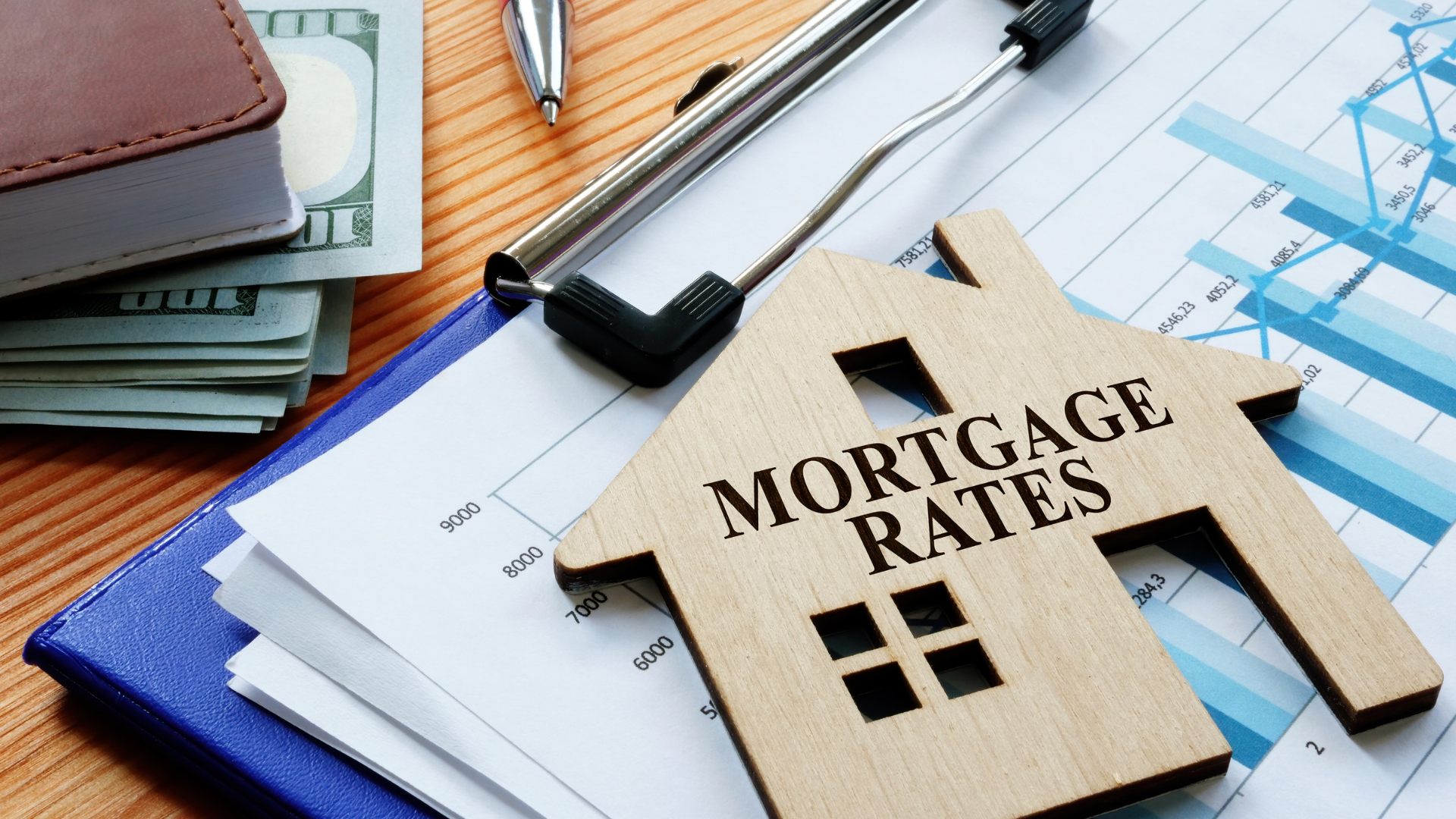
There is no single best day for every buyer. The decision depends on your expected closing date, lender’s policies, financial comfort, and willingness to accept the risk of a changing rate. Before deciding, ask your lender to explain the lock period, fees, extension terms, and what happens if rates fall.
Finding the right home in Petaluma or Novato involves plenty of decisions. Once you are arranging financing, another question becomes important: Should you lock your mortgage rate or leave it floating?
Rather than trying to predict the next market move, start by understanding what a rate lock does—and what it does not guarantee.
What Is a Mortgage Rate Lock?
A rate lock generally protects your quoted interest rate for a specified period, provided you close within that period and there are no relevant changes to your application.
Mortgage rates can change daily and sometimes within the same day. If your rate is floating rather than locked, it can change before closing. Rate-lock periods commonly run for 30, 45, or 60 days, although options vary by lender.consumerfinance
A lock is not the same as final loan approval. Your lender still needs to complete its review and confirm that you satisfy the loan requirements.
Why Your Closing Date Matters
A lock needs to fit your transaction—not just the rate you want.
Before choosing a lock period, discuss:
- Your scheduled closing date.
- Outstanding loan documents or approval conditions.
- The appraisal schedule.
- Any property or transaction issues that could affect timing.
- The lender’s expected processing time.
- How much room the lock provides for an unexpected delay.
The Consumer Financial Protection Bureau recommends making sure you can reasonably expect to close before the lock expires. Otherwise, you may need to pay for an extension—even when a delay involves the lender’s processing time.consumerfinance
For Petaluma and Novato buyers, the important question is not whether one city requires a particular lock period. It is whether your financing timeline and purchase agreement work together.
My Buyer’s Guide can help you organize the broader steps involved in your purchase.
Locking Versus Floating: What Is the Tradeoff?
Locking provides more certainty about the quoted rate during the agreed period. Floating leaves you exposed to changes in either direction.
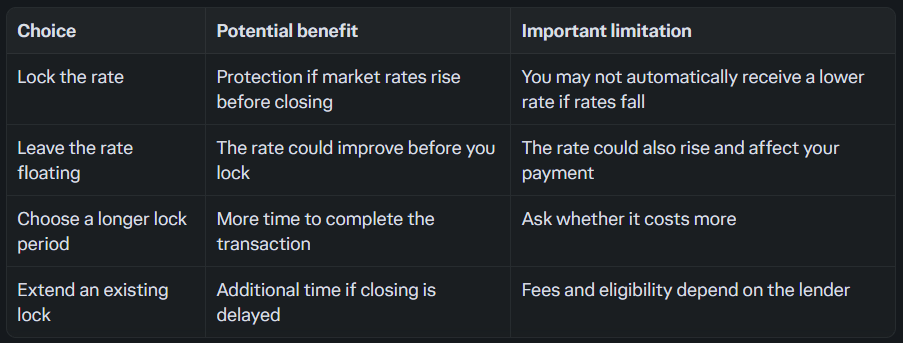
Ratee-lock policies vary. Ask for the terms in writing rather than assuming every lender handles these choices the same way.
What Happens If Rates Fall After You Lock?
A lower market rate does not necessarily mean your locked rate will change.
Before committing, ask whether your lender offers any opportunity to adjust downward after locking. If it does, request a written explanation of:
- Who is eligible.
- What market change is required.
- When an adjustment can be requested.
- Whether there is a fee.
- Whether other loan terms would change.
A standard lock may prevent you from benefiting from lower market pricing after you commit, so clarify the policy before making your decision.consumerfinance
The goal is to understand your options—not to assume you will be able to renegotiate later.
Can a Locked Rate Still Change?
Yes, in certain circumstances.
The CFPB explains that a locked rate can change when relevant application details change. Examples include changing your loan type or down payment, a change in your credit score, or the lender being unable to verify income as expected. An appraisal below the purchase price can also affect loan pricing in some circumstances.
Before making financial changes during the purchase, speak with your lender. Ask how a new loan, major purchase, job change, or adjustment to your down payment could affect your application.
If your locked rate changes, request a clear explanation of why it changed and review any revised loan documents.
Check More Than the Interest Rate
Two offers with the same interest rate can have different upfront costs.
When comparing lenders, review:
- Discount points.
- Lender credits.
- Other lender charges.
- The lock period.
- Whether the quoted rate is already locked.
- Extension policies and costs.
Points generally mean paying more at closing in exchange for a lower rate. Lender credits often reduce upfront closing costs in exchange for a higher rate, although some promotional credits are not tied to a rate increase. Ask the lender to explain the specific arrangement.
Compare similar loan scenarios and ask for written Loan Estimates. An advertised rate alone does not show the complete cost.
Where to Check Your Lock Status
Look at the top of page 1 of your Loan Estimate. It should indicate whether the interest rate is locked and, if so, until when.
Receiving a Loan Estimate does not automatically mean the lender has locked your rate. If the rate is floating, it can still change. You may receive a revised Loan Estimate after requesting a lock or changing other loan details.consumerfinance
If anything is unclear, ask your lender before relying on the payment estimate.
Questions to Ask Before You Lock
Use this checklist during your financing conversation:
- Is my quoted rate locked or floating?
- How long would this lock last?
- Does the lock cover my expected closing date with reasonable room for delays?
- Is there a charge for this lock period?
- What happens if closing is delayed?
- What would an extension cost, and who would be responsible?
- What happens if market rates fall after I lock?
- Which changes to my application could affect the locked rate?
- Does the quote include points or lender credits?
- Can you provide the lock terms in writing?
If you are selling another home to fund the purchase, discuss that timing with both your agent and lender. My Seller’s Guide can help you prepare questions about the sale side of your move.
Bottom Line
A mortgage rate lock is a planning tool, not a way to guarantee that you have picked the lowest rate the market will offer.
For Petaluma and Novato buyers, the stronger approach is to align the lock with the transaction timeline, understand the lender’s rules, and choose a payment you are comfortable carrying.
If you are planning a purchase, contact me to discuss your home search and how to coordinate the transaction with your lender.
A price cut does not always mean a bargain. Learn how Petaluma and Novato buyers can compare value, condition, competing listings, and offer terms.
Buying in Petaluma or Novato? Budget for closing costs, insurance, taxes, inspections, utilities, and repairs, and compare available financing incentives.
Buying a home in Novato? Learn what happens after your offer is accepted, from escrow and inspections to financing, contingencies, and the final walk-through.

Buying a home in Petaluma? Plan for closing costs, insurance, taxes, inspections, utilities, and repairs—not just your down payment and mortgage.

What should you check when touring a home in Novato?

Can You Buy Your Next Petaluma Home Before Selling Your Current One?

Getting ready to sell your Novato home? Follow this practical timeline for repairs, staging, disclosures, pricing, photos, and showings before you list.

Compare real estate agents in Petaluma and Novato beyond star ratings. Learn how to assess reviews, sales results, local expertise, strategy, and fees.

Compare real estate agents in Petaluma and Novato with this buyer and seller guide. Evaluate local experience, marketing, negotiations, reviews, fees, and strategy.

Mortgage rates may change, but you can still influence your loan terms. Learn how credit, loan options, lender comparisons, and buyer incentives can affect your mortgage rate.