

(415) 717-7243
More Foreclosures Are Making Headlines. Is Another Housing Crash Coming?
If you've been following real estate news lately, you may have noticed a familiar word appearing in more headlines.
Foreclosure.
And for anyone who remembers the 2008 housing crisis, that word can bring back some uncomfortable memories.
Maybe you're thinking about buying a home and wondering whether prices could fall dramatically. Or perhaps you're considering selling and are concerned that an increase in foreclosures could bring more competition to the market.
Those are understandable questions.
But before assuming the housing market is heading toward another crash, it's important to look beyond the headlines.
Foreclosures have increased, but current national data doesn't show a repeat of the conditions that led to the 2008 housing crisis.
There are important differences in today's housing supply, homeowner equity, and the number of properties actually reaching foreclosure.
Let's look at what the numbers tell us—and what they mean if you're considering a move.
Foreclosures Are Rising, but the Bigger Picture Matters
According to ATTOM's 2026 Mid-Year Foreclosure Market Report, lenders completed foreclosures on 27,983 U.S. properties during the first six months of 2026.
That represents a 33% increase compared with the first half of 2025.
At first glance, that sounds significant.
And for the households affected, foreclosure is certainly serious.
But there's another important part of the story.
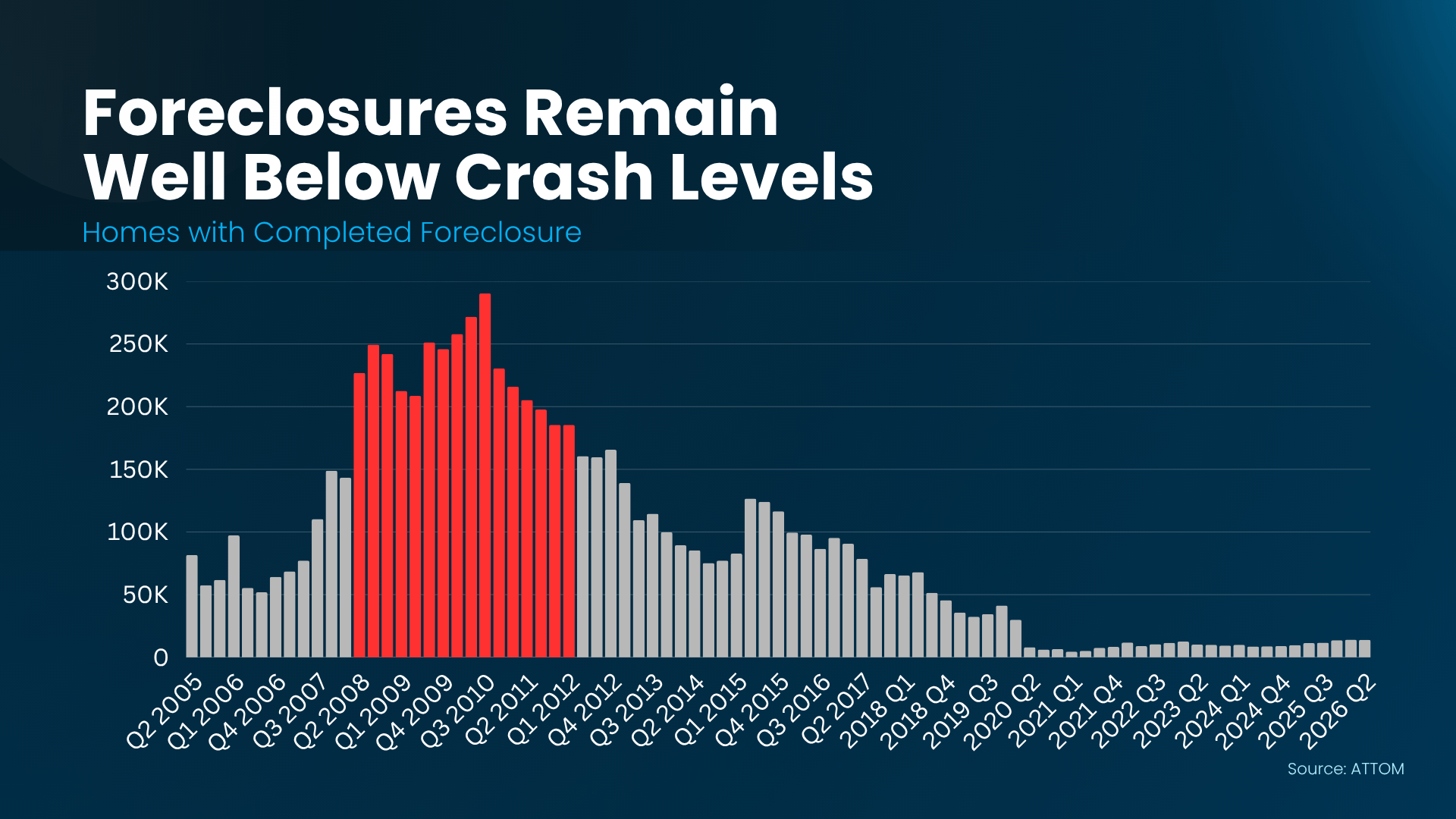
Even after that increase, completed foreclosures were still approximately 26% below the first half of 2020.
Go back even further, to the 2008 housing crisis, and the difference becomes much more pronounced.
During the worst years of that crisis, lenders were completing hundreds of thousands of foreclosures each quarter.
Today's totals remain far below those historic peaks.
New Paragraph
This doesn't mean foreclosure activity should be ignored.
It means that an increase from a relatively low starting point isn't the same thing as a nationwide foreclosure crisis.
And understanding that distinction matters when making real estate decisions.
More Homes for Sale Doesn't Automatically Mean a Housing Crash
Another common concern is that an increase in foreclosures could flood the housing market with properties.
That's what many people remember about the last major housing downturn.
But the supply situation today is different.
One way economists measure housing supply is through something called months of inventory.
This estimates how long it would take to sell the homes currently available if sales continued at the existing pace and no additional properties were listed.
Generally, four to six months of supply is considered a relatively balanced market.
For September 2026, the National Association of REALTORS® reported approximately 4.8 months of existing-home inventory.
The latest October report, released November 12, puts the national figure at approximately 5.1 months.
That represents more available inventory than buyers experienced during the extremely competitive market of a few years ago.
But it is nowhere near the national inventory levels seen during the worst part of the previous housing crash.
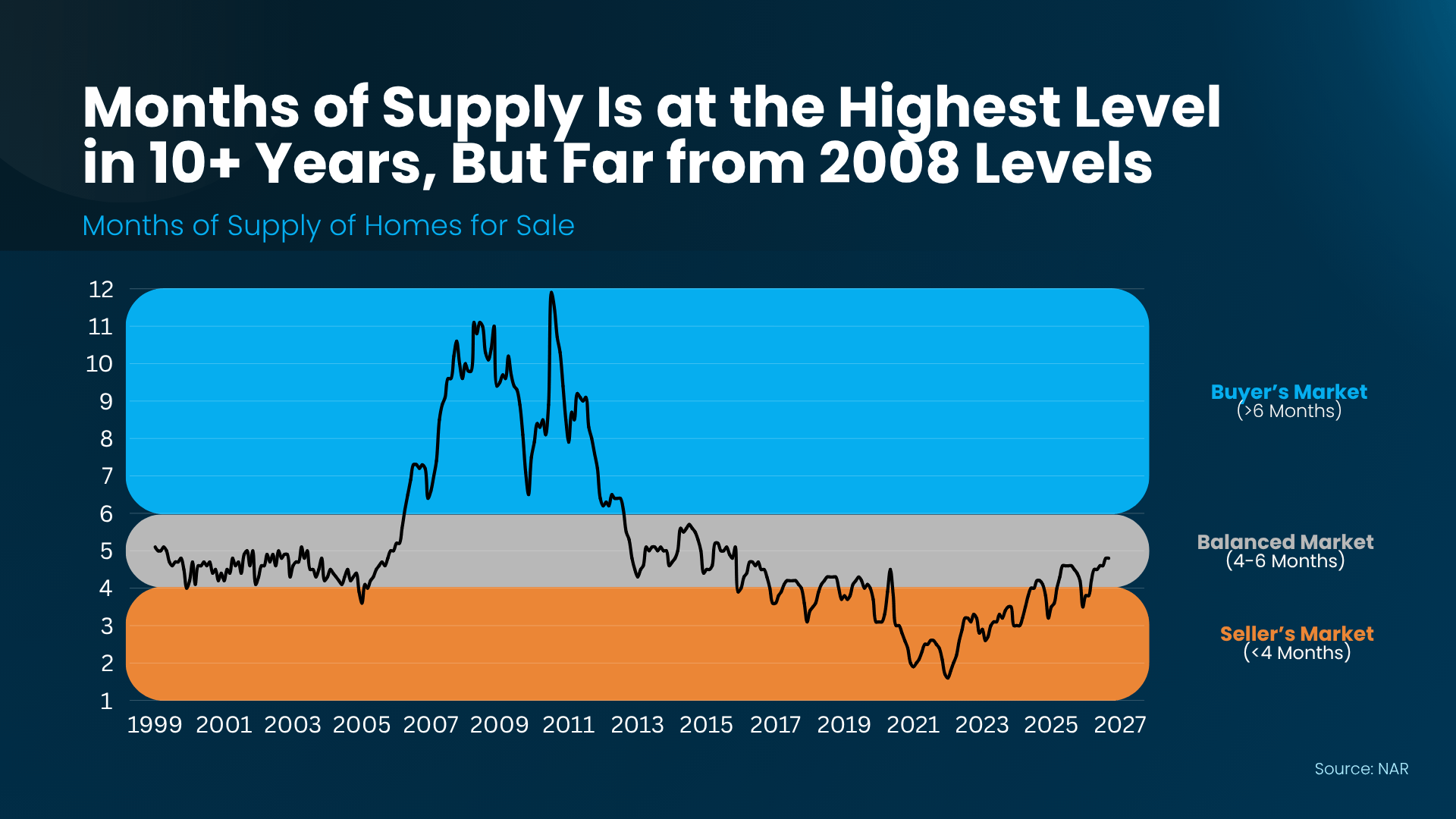
Source: National Association of REALTORS®. The supplied KCM chart reflects data through September 2026. The newer October 2026 reading is 5.1 months.
Here's why this matters.
More available homes can give buyers additional options. It can also mean sellers need to be more thoughtful about pricing, presentation, and negotiations.
But a more balanced market is not automatically a collapsing market.
In fact, a healthy real estate market needs a reasonable selection of homes for buyers to consider.
The more relevant question is whether supply and demand are changing in your specific community—and how those changes affect the property you're buying or selling.
Homeowner Equity Is Another Important Difference
One of the biggest differences between today's housing market and the 2008 crisis is the amount of equity many homeowners have built.
Home equity is the difference between a property's estimated market value and the debt secured by that property.
For example, if a house is worth $900,000 and the homeowner owes $350,000, the property has approximately $550,000 in equity before selling expenses.
That equity can provide homeowners with additional options when their circumstances change.
According to ATTOM's second-quarter 2026 equity report, 41.1% of mortgaged residential properties were considered equity-rich.
ATTOM defines equity-rich properties as those where the outstanding secured loans amount to no more than half the estimated property value.
The report also found that 3.2% of mortgaged properties were seriously underwater, meaning the loan balances exceeded the property's estimated value by at least 25%.
Meanwhile, Cotality's September 2026 homeowner equity report estimated that homeowners with mortgages held an average of approximately $310,000 in housing wealth nationwide.
These figures come from different studies and measure different aspects of equity, so they shouldn't be treated as interchangeable.
They also don't mean every homeowner is in a strong financial position.
In fact, ATTOM reports that the share of equity-rich mortgaged homes has declined over the past year, while the percentage of seriously underwater properties has increased.
That's worth monitoring.
But the broader picture still shows substantial homeowner equity across the country.
And that can make an important difference when someone needs to sell.
Why Equity Can Give Homeowners More Options
Imagine two different homeowners experiencing financial difficulties.
The first homeowner owes more on the property than the home is worth.
The second has significant equity because they've owned the property for many years and paid down much of the loan.
Both situations can be stressful.
But the second homeowner may have more flexibility.
If selling becomes necessary, there may be enough value in the property to satisfy the mortgage and applicable selling expenses.
The homeowner could potentially complete a sale without going through foreclosure.
Of course, that isn't guaranteed.
A home's market value, outstanding loan balances, liens, transaction expenses, and available time all matter.
And not every homeowner who is struggling financially will have sufficient equity or enough time to complete a traditional sale.
For anyone experiencing difficulty making mortgage payments, it's important to contact the mortgage servicer promptly and explore available assistance.
California's Homeowner Bill of Rights provides important protections for eligible homeowners facing foreclosure, and HUD-approved housing counselors may be able to provide free assistance.
You can learn more through the California Attorney General's foreclosure prevention resources.
The takeaway is simple: equity can create additional options, but every homeowner's circumstances deserve individual attention.
What Does This Mean for Petaluma and Novato?
National housing reports are valuable because they help us understand the broader market.
But they don't automatically tell us what's happening in a particular neighborhood.
A report showing more completed foreclosures nationwide doesn't establish that foreclosures are surging in Petaluma.
And a national inventory figure doesn't tell us how many comparable homes are available to a buyer in Novato.
Those questions require local data.
Here in Sonoma and Marin Counties, housing conditions can vary considerably depending on location, price range, property type, and condition.
A detached home in an established Petaluma neighborhood may face different competition from a condominium in Novato.
Even homes within the same city can experience different buyer demand.
That's why I believe the most useful market analysis should connect the national picture to the individual property.
Rather than asking whether another housing crash is coming, buyers and sellers may be better served by understanding what homes are actually selling for nearby, how much competition exists, and how buyers are responding to current listings.
Those details help us make decisions based on what's happening now instead of what a dramatic headline suggests might happen.
If You're Thinking About Buying, Should You Wait for Foreclosures?
Some buyers see increasing foreclosure headlines and wonder whether waiting could lead to a bargain.
It's understandable.
But a foreclosure isn't automatically a good deal, and a foreclosed home isn't necessarily priced below comparable properties.
Some distressed properties may need repairs or involve additional complexities related to their condition, ownership, financing, or sale process.
And the national increase in completed foreclosures doesn't guarantee that a large number of discounted properties will suddenly become available in your preferred neighborhood.
If you're considering buying in Petaluma or Novato, I'd focus on finding a property that meets your needs and evaluating it based on its condition, comparable sales, available alternatives, and the transaction terms.
A well-negotiated purchase doesn't always involve a distressed property.
As I discussed in my recent article, Buying a Home? The Asking Price Isn't the Only Thing You Can Negotiate, certain purchase terms, repairs, and allowable seller concessions may also be part of the negotiation.
The right opportunity is the one that makes sense for your circumstances—not simply the one associated with the most attention-grabbing headline.
If You're Planning To Sell, What Should You Focus On?
For sellers, the concern is often the opposite.
Will additional homes coming onto the market make it harder to attract buyers?
Could an increase in foreclosures affect what buyers are willing to pay?
Those are reasonable questions, but the answers depend on your local market.
A national increase in foreclosure activity doesn't automatically mean your property will face a wave of distressed competition.
What matters more is how your home compares with the properties buyers are actively considering.
That includes recent comparable sales, competing listings, condition, pricing, and how effectively the home is presented.
For homeowners who have built substantial equity, understanding the financial side of a possible sale is also important.
Your home's value and the amount you'll actually receive after closing are not the same.
If you're beginning to consider selling, my recent article, How Much Money Do You Actually Keep When You Sell Your Home?, explains how mortgage payoffs and transaction expenses can affect your proceeds.
Ultimately, the decision to sell should be connected to your plans and the conditions affecting your property—not solely to national foreclosure headlines.
What If Your Home's Value Has Changed?
This is where a personalized evaluation can be particularly helpful.
Online estimates can provide a starting point, but they may not fully reflect a property's improvements, condition, neighborhood competition, or recent comparable sales.
And if you're trying to determine how much equity you have, the estimated property value is only part of the calculation.
You'll also need to understand the outstanding debt secured by the property.
As a Compass Realtor serving Petaluma, Novato, and surrounding Sonoma and Marin County communities, I help buyers and sellers evaluate their real estate options using property-specific information.
My professional background includes a B.S. in Finance from Sonoma State University and previous experience in mortgage loan processing.
That financial foundation informs how I approach conversations about home values, transaction decisions, and the numbers behind a potential move.
Whether you're considering selling, exploring a purchase, or simply wondering how recent market changes might affect your property, the best place to start is with reliable information.
The Bottom Line
Foreclosure activity has increased, and it's a trend worth following.
But the available research doesn't support treating today's housing market as a repeat of 2008.
Completed foreclosures remain far below the levels associated with the previous crisis, housing supply is within a more balanced national range, and many homeowners continue to hold substantial equity.
At the same time, some borrowers are facing genuine financial challenges, and no national statistic can guarantee what will happen to an individual market or property.
The most important question isn't whether a dramatic national headline sounds familiar. It's what the actual numbers mean for your home and your next move.
If you're considering buying or selling in Petaluma, Novato, or elsewhere in Sonoma and Marin Counties, I'd be happy to help you understand the local market and evaluate your options.
Let's Discuss Your Local Real Estate Market
Katia Bidaurreta | Realtor® – Compass
CA DRE #02152439
Phone: (415) 717-7243
Email:
katia.bidaurreta@compass.com
Website:
www.katiabidaurreta.com
Official Compass Agent Profile

This Veterans Day, honor local veterans in Petaluma and Marin County while learning about VA homeownership benefits and housing resources.

Buying a home? Learn how seller credits, repair negotiations, and contract terms can affect your purchase, with insights for Petaluma and Novato buyers.

Own a home in Petaluma or Novato but live elsewhere? Learn how to sell remotely, coordinate showings, handle documents, and work with a local agent.

Selling a home in Petaluma or Novato? Learn how mortgage payoffs, closing costs, and local transfer taxes affect your seller net proceeds.

Will the silver tsunami flood the housing market? Discover what 13.9 million projected home transitions mean for sellers and future home inventory.
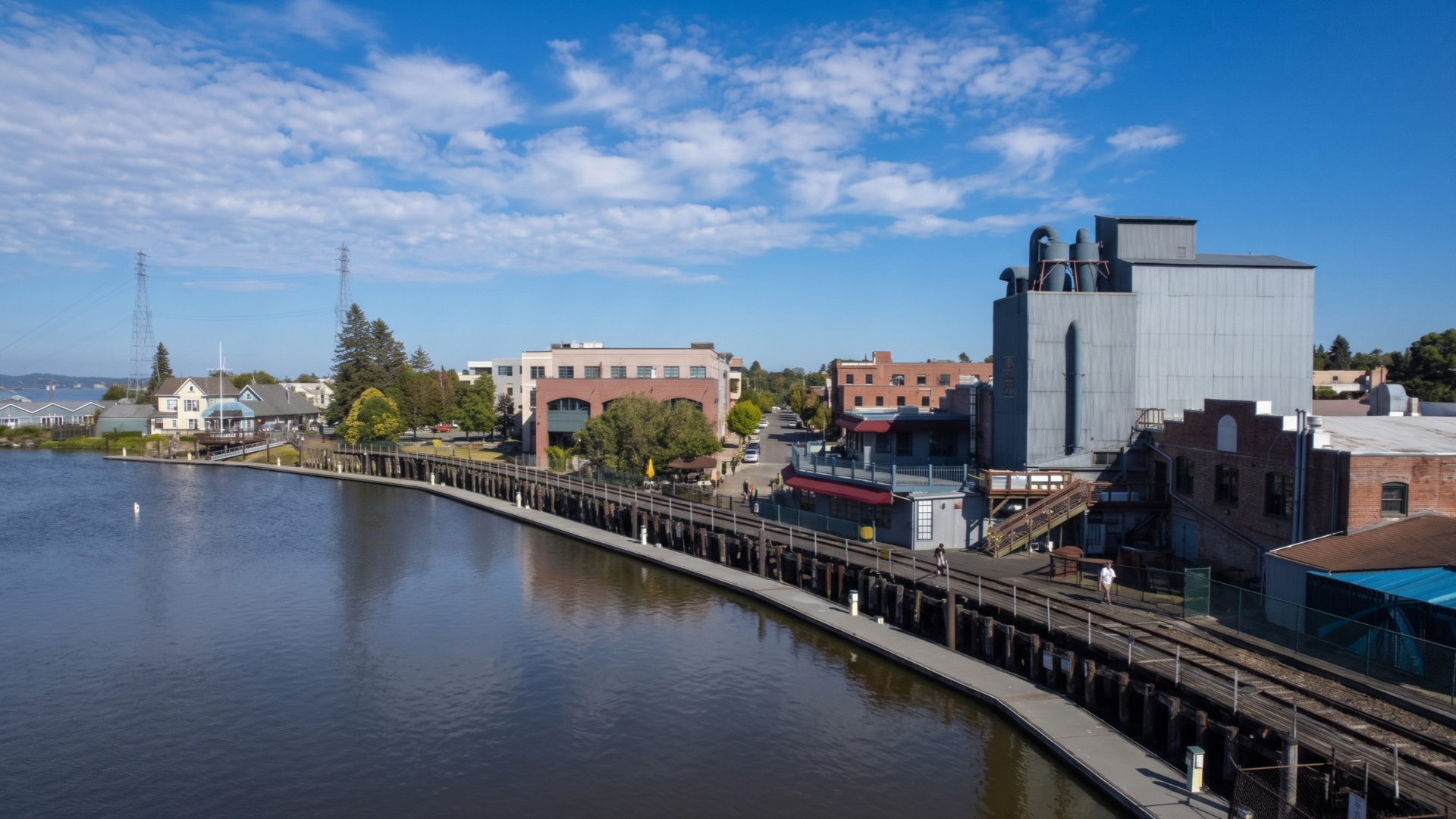
Petaluma's historic railroad trestle could become a public waterfront promenade. Explore the project's history, community progress, and future plans.

Think your credit score is too low to buy a home? Discover what's changed in 2026 and how to explore financing options in Petaluma and Novato.

A major design museum is planned for Novato's former Birkenstock campus. Discover its proposed transformation and surprising connection to Petaluma.
Petaluma's General Plan 2050 is now in effect. Explore what it means for future housing, neighborhoods, downtown, transportation, and local real estate.

By Katia Bidaurreta | Realtor® – Compass