

(415) 717-7243
Buying a Home? The Asking Price Isn't the Only Thing You Can Negotiate
You find a home you love.

The location feels right, the layout works for your lifestyle, and you can already imagine yourself living there.
But there's something about the price that makes you hesitate.
Naturally, your first thought might be: Can I offer less?
That's a reasonable question. But here's something many buyers don't realize until they're already negotiating a purchase.
The asking price isn't the only part of a home sale that's negotiable.
Depending on the property, the seller's circumstances, and the competition, you may also be able to negotiate help with closing costs, repairs, certain expenses, or even the timing of the transaction.
And recent housing data suggests more buyers are successfully negotiating these kinds of arrangements.
The important thing is understanding where those opportunities exist—and when they don't.
More Buyers Are Receiving Something Beyond the House
According to a September 2026 report from Redfin, sellers provided concessions in 44.7% of U.S. home sales during the three months ending August 2026.
That's up from 42.6% during the comparable period in 2025.
A seller concession is something a seller agrees to provide that helps reduce certain expenses associated with a buyer's purchase.
It might be a contribution toward eligible closing costs, money allocated for an agreed repair, or another negotiated financial arrangement.
These are separate from simply lowering the home's purchase price.
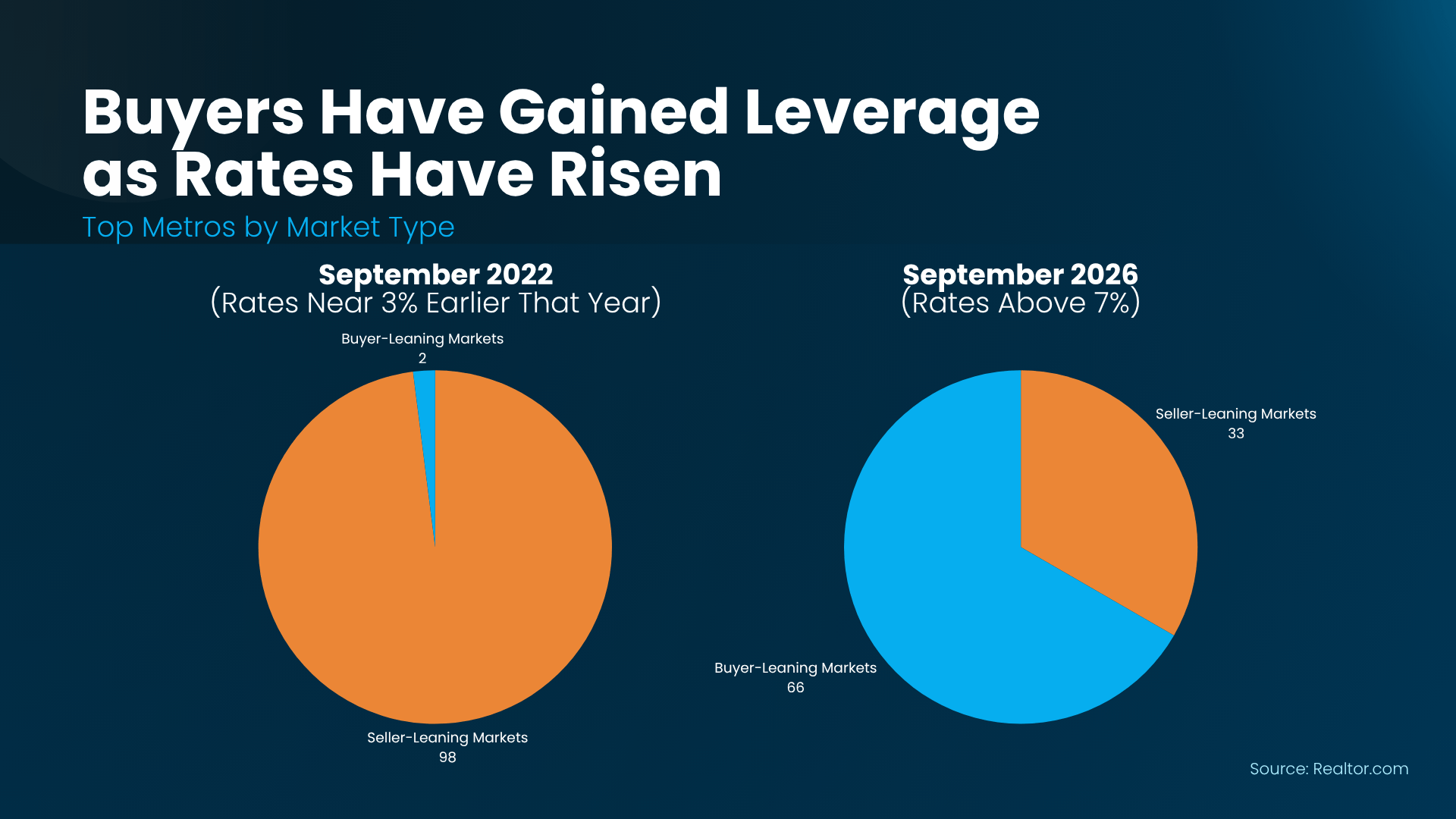
t's an interesting shift.
During highly competitive housing markets, buyers may have relatively little room to negotiate. When multiple offers arrive on a property, sellers often have more flexibility to choose the terms they prefer.
But when a home has been on the market longer or competing listings offer buyers more choices, a seller may be more willing to consider an offer that includes additional requests.
That doesn't mean every seller is prepared to negotiate.
And it certainly doesn't mean buyers should expect the same opportunities in every city.
The North Bay Doesn't Always Follow the National Trend
Here's where local real estate knowledge becomes important.
The national concession figure of 44.7% doesn't mean nearly half of home purchases in Petaluma or Novato included seller concessions.
In fact, Redfin's research reported that concessions occurred in just 18.6% of transactions in the San Francisco metropolitan area during the same period.
That regional figure isn't a direct measurement of Petaluma or Novato, but it illustrates how much negotiating conditions can vary between markets.
Looking at city-level sales data tells a similarly important story.
Redfin's September 2026 figures showed that the average sale-to-list price ratio was approximately 101.8% in Petaluma and 100.4% in Novato.
In other words, homes in those reported sales were, on average, still selling at or slightly above their listed prices.
That doesn't mean there were no opportunities to negotiate.
It means we shouldn't assume a property is negotiable simply because national headlines say buyers have more leverage.
A recently listed, well-maintained home with strong buyer interest is very different from a property that has been available for several weeks and has undergone multiple price adjustments.
Even two homes on the same street may require different approaches.
That's why the right offer strategy starts with understanding the specific property and its competition.
A Lower Purchase Price and a Seller Credit Aren't the Same Thing
Let's say you're considering a home listed for $900,000.
You like the property, but you're looking for ways to make the purchase work more comfortably.
There may be two different negotiating approaches worth evaluating.
Option A: Negotiate a lower purchase price.
You might offer $890,000 instead of $900,000.
If the seller accepts, the agreed purchase price is reduced by $10,000.
Option B: Negotiate a closing-cost credit.
You might agree to the $900,000 price but request that the seller contribute $10,000 toward eligible buyer closing costs.
If accepted and permitted by your financing program, that contribution could reduce the amount of money you need to bring toward those particular expenses at closing.
Neither approach is automatically better.
A lower price changes the purchase amount, while a closing-cost credit addresses eligible transaction expenses.
The financial impact depends on your down payment, financing requirements, available funds, and the terms of the contract.
Importantly, seller credits are not automatically cash paid to the buyer. Loan programs may limit the amount and permitted uses of those contributions.
A qualified lender can help you compare the actual figures before you decide which arrangement fits your circumstances.
This is one reason a strong negotiation strategy involves looking at the complete financial picture rather than focusing exclusively on the listing price.
Sometimes the Better Negotiation Happens After the Inspection
Imagine finding an older home in Petaluma.
You love the neighborhood, the character of the property, and the potential it offers.
But during your inspections, a qualified professional identifies a repair that may require additional attention.
Now you have a decision to make.
Depending on your contract and the circumstances, you may be able to negotiate a repair before closing, request an appropriate credit, or discuss another arrangement.
The seller may agree, decline, or propose an alternative.
What matters is understanding the condition, the likely cost of addressing it, and the options available under your purchase agreement.
For example, if an inspection reveals an aging plumbing component, it may be helpful to obtain a contractor's professional assessment before deciding what to request.
A repair credit can sometimes provide flexibility, but it also means taking responsibility for coordinating work after purchasing the property.
Having a seller complete the work may be preferable in other situations, subject to appropriate documentation and verification.
The right approach depends on the problem and the buyer's priorities.
And here's something I always want buyers to remember:
Negotiating doesn't mean ignoring important property conditions just to reach an agreement.
Your inspections, disclosures, and contractual protections still matter.
Timing Can Be Part of the Negotiation, Too
Not every valuable term involves money.
Sometimes, the timing of the sale can make a meaningful difference to both sides.
A seller might prefer additional time to coordinate their next move.
A buyer may need a closing date that fits their relocation schedule.
If both parties have compatible priorities, adjusting the proposed timeline might help create an offer that works better for everyone.
Other details, such as certain appliances or fixtures, may also be addressed in the purchase agreement when appropriate.
Of course, not every request will be accepted.
And changes involving possession, property inclusions, or contingencies should be clearly documented.
The bigger point is that a real estate offer is more than a purchase price.
It's an agreement involving multiple terms that deserve careful consideration.
How Do You Know When a Seller Might Be Willing To Negotiate?
This is where I believe working with a knowledgeable local real estate professional can make a difference.
Before preparing an offer, it's worth understanding how the property compares with other homes buyers are considering.
For example, has the home recently come onto the market, or has it been listed for an extended period?
Have there been price changes?
Are similar homes in the neighborhood selling quickly?
Does the property have condition or maintenance concerns that may affect buyers' decisions?
And what does the seller's response to your proposed terms tell us during negotiations?
These details help shape the strategy.
An offer on a popular home in Novato with multiple interested buyers may require a different approach from an offer on a property that has been sitting on the market without much activity.
The goal isn't to ask for every possible concession.
It's to identify which terms would genuinely benefit you and make an offer the seller has a reason to consider.
I've previously written about the broader return of negotiations in The “Take It or Leave It” Attitude Is Fading from the Market.
But when you're actively purchasing a home, those general trends need to become a property-specific plan.
Why Your Buyer's Agent Matters During Negotiations
Finding the right home is only one part of the buying process.
You also need to evaluate the property's condition, understand the terms of the purchase, consider available alternatives, and decide what you're comfortable negotiating.
As a Compass real estate agent serving Petaluma, Novato, and surrounding Sonoma and Marin County communities, I help buyers navigate these decisions with an understanding of the local market.
My background includes a B.S. in Finance from Sonoma State University and professional experience in mortgage loan processing.
That financial background informs the way I approach real estate transactions, particularly when evaluating how different contract terms may affect a buyer's plans.
My goal isn't simply to help you make an offer.
It's to help you understand the decisions you're making, what those decisions could mean, and how to approach the transaction with a strategy suited to your circumstances.
Sometimes the right approach may involve negotiating the purchase price.
Other times, a seller credit, repair agreement, or carefully considered closing timeline may deserve attention.
And sometimes, the best decision is recognizing that a property or set of terms isn't the right fit.
You can learn more about the buying process through my Home Buyer's Guide.
Is It Worth Asking for Seller Concessions?
Potentially, yes.
But not because a national report says nearly half of buyers received them.
The real question is whether the request makes sense for the specific home, your situation, and the current local market.
A seller may be willing to negotiate on one property and unwilling to offer the same terms on another.
That's normal.
The opportunity comes from understanding the details rather than assuming every transaction follows the same pattern.
And you don't have to know all the answers before starting your home search.
That's part of what your real estate professional is there to help you evaluate.
Bottom Line
The purchase price is important, but it isn't the only part of buying a home that deserves your attention.
Seller credits, repairs, closing dates, and other terms may create opportunities for an agreement that better meets your needs.
What's possible depends on the property and the circumstances.
If you're considering buying a home in Petaluma or Novato, let's talk about more than just the asking price.
I can help you evaluate available homes, understand the local competition, and develop an offer strategy that reflects your goals.
Whether you're purchasing your first property, relocating, or planning your next move, having the right information can make the experience more manageable.
Let's Discuss Your Homebuying Strategy
Katia Bidaurreta | Realtor® – Compass
CA DRE #02152439
Phone: (415) 717-7243
Email:
katia.bidaurreta@compass.com
Website:
www.katiabidaurreta.com
Official Compass Agent Profile

This Veterans Day, honor local veterans in Petaluma and Marin County while learning about VA homeownership benefits and housing resources.

Own a home in Petaluma or Novato but live elsewhere? Learn how to sell remotely, coordinate showings, handle documents, and work with a local agent.

Selling a home in Petaluma or Novato? Learn how mortgage payoffs, closing costs, and local transfer taxes affect your seller net proceeds.

Will the silver tsunami flood the housing market? Discover what 13.9 million projected home transitions mean for sellers and future home inventory.

Petaluma's historic railroad trestle could become a public waterfront promenade. Explore the project's history, community progress, and future plans.

Think your credit score is too low to buy a home? Discover what's changed in 2026 and how to explore financing options in Petaluma and Novato.

A major design museum is planned for Novato's former Birkenstock campus. Discover its proposed transformation and surprising connection to Petaluma.

Petaluma's General Plan 2050 is now in effect. Explore what it means for future housing, neighborhoods, downtown, transportation, and local real estate.

By Katia Bidaurreta | Realtor® – Compass

Buying a home in Petaluma or Novato? Discover 5 important checks covering insurance, wildfire hazards, home condition, and local preparedness.